The simple interest formula
I = P × r × t
P is the principal, r the annual rate as a decimal and t the time in years. For months, use t = months ÷ 12; for days, t = days ÷ 365.
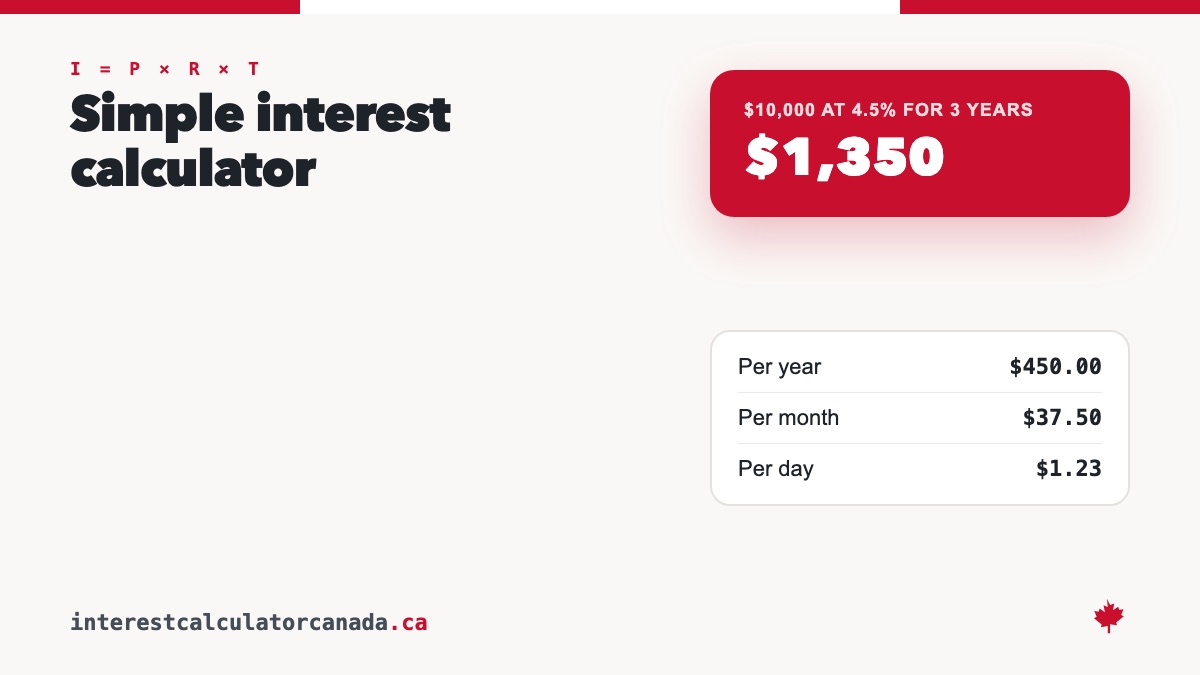
Example: $10,000 at 4.5% for 3 years earns 10,000 × 0.045 × 3 = $1,350.
Where simple interest is used in Canada
- GICs that pay out interest each year instead of compounding it.
- Lines of credit and some loans, where interest is calculated daily on the balance — see the line of credit calculator.
- Bonds, which pay fixed coupons on their face value.
- Short-term arrangements such as interest on a late invoice.
Simple vs compound interest on $10,000 at 5%
| Time | Simple interest | Compound interest (annual) |
|---|---|---|
| 1 years | $500.00 | $500.00 |
| 3 years | $1,500.00 | $1,576.25 |
| 5 years | $2,500.00 | $2,762.82 |
| 10 years | $5,000.00 | $6,288.95 |
| 20 years | $10,000.00 | $16,532.98 |
Over short periods they are close; over decades compounding pulls far ahead. Model compound growth with the compound interest calculator.
Frequently asked questions
How do I calculate simple interest for months?
Divide the months by 12 to get years. $5,000 at 6% for 9 months: 5,000 × 0.06 × 0.75 = $225.
How do I calculate daily interest?
Multiply the principal by the annual rate and divide by 365. $20,000 at 7% earns about $3.84 per day.
Is simple interest better than compound interest?
For borrowers, yes — you pay less. For savers, compound interest earns more over time.
Results are estimates based on the figures you enter and assume rates do not change. They are not financial advice.