How line of credit interest is calculated
Interest = balance × (prime + spread) ÷ 365 × days
Interest is calculated on each day’s balance and charged monthly. A 31-day month therefore costs slightly more than a 30-day month at the same balance.
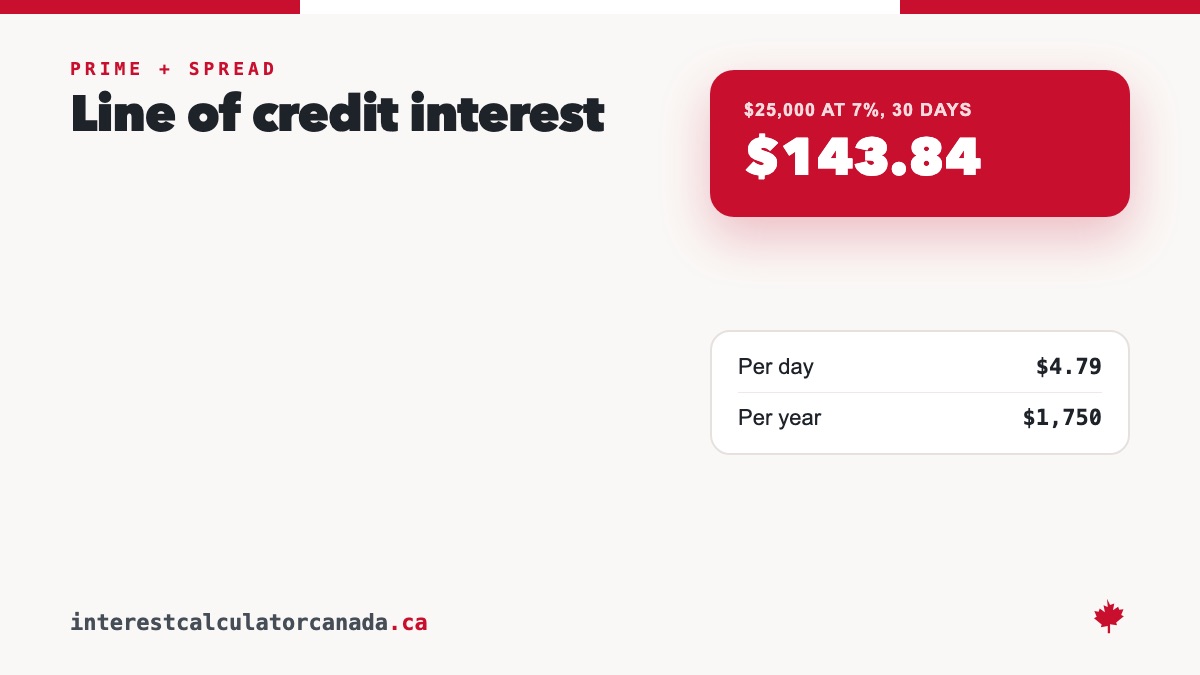
Example at prime + 2% (7% total)
| Balance | Per day | 30-day month | Per year |
|---|---|---|---|
| $10,000 | $1.92 | $57.53 | $700.00 |
| $25,000 | $4.79 | $143.84 | $1,750.00 |
| $50,000 | $9.59 | $287.67 | $3,500.00 |
| $100,000 | $19.18 | $575.34 | $7,000.00 |
Prime rate and your spread
- Prime is set by each bank and generally moves when the Bank of Canada changes its policy interest rate.
- The spread is fixed in your agreement — for example prime + 0.5% for a home equity line of credit (HELOC) or prime + 2% or more for an unsecured personal line.
- Interest-only minimums are common, but paying only interest means the balance never falls. Pay down principal whenever you can.
Comparing with a credit card? Try the credit card interest calculator.
Frequently asked questions
How is interest on a line of credit calculated?
Daily: the balance multiplied by the annual rate (prime plus your spread) and divided by 365, added up over the billing period.
Why did my line of credit payment change?
Either the balance changed, the number of days in the billing period changed, or the prime rate moved.
Is a HELOC cheaper than a personal line of credit?
Usually, because it is secured by your home. The trade-off is that your home is at risk if you cannot repay.
Results are estimates based on the figures you enter and assume rates do not change. They are not financial advice.