Saving for a goal
Whether it is an emergency fund, a down payment or a trip, two questions matter: how long will it take and how much should I put away each month. The calculator answers both, including the interest your account adds along the way.
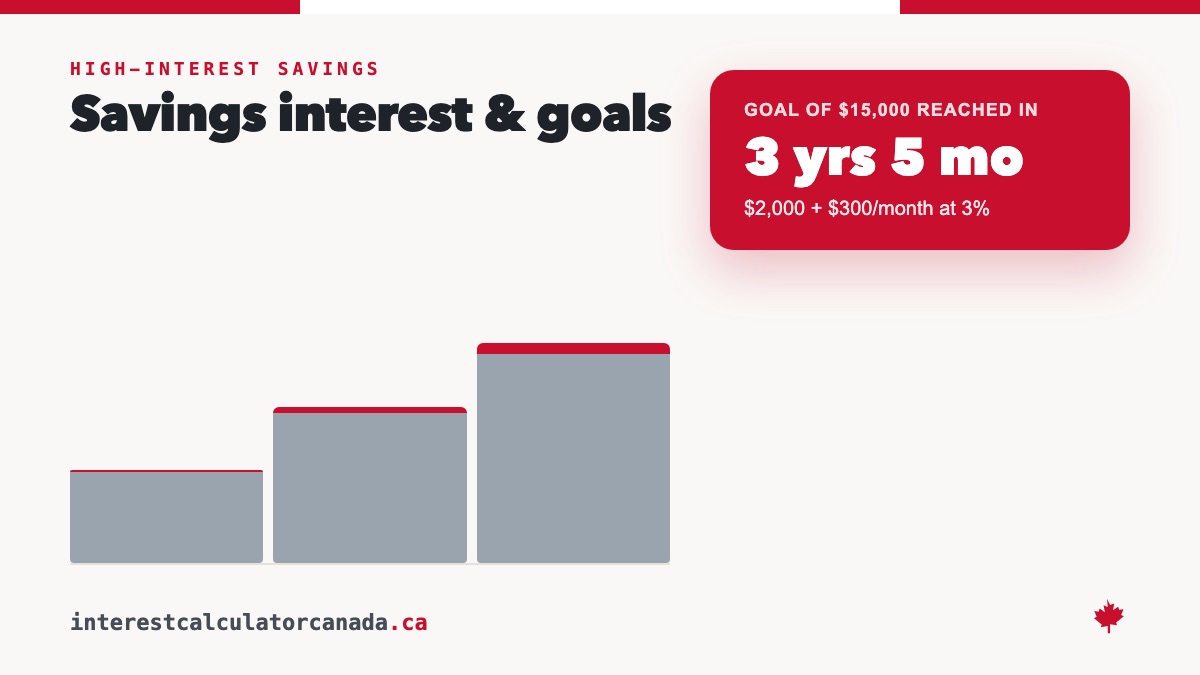
Monthly savings needed at 3%
| Goal | Time | Monthly deposit | You deposit in total |
|---|---|---|---|
| $5,000 | 2 years | $202.41 | $4,858 |
| $10,000 | 3 years | $265.81 | $9,569 |
| $20,000 | 5 years | $309.37 | $18,562 |
| $50,000 | 10 years | $357.80 | $42,936 |
The difference between the goal and the total you deposit is the interest earned.
Getting the most from a high-interest savings account
- Read the fine print on promotional rates. Many accounts offer a boosted rate for a few months, then drop to a lower regular rate. Use the regular rate for long-term planning.
- Check deposit insurance. Eligible deposits at CDIC member institutions are protected up to $100,000 per insured category; credit unions are covered by provincial deposit insurers.
- Consider where the account sits. Interest in a regular account is taxable; the same savings inside a TFSA grow tax-free. Try the TFSA calculator.
- Compare with GICs if you will not need the money for a while — see the GIC ladder calculator.
Frequently asked questions
How often do Canadian savings accounts pay interest?
Most calculate interest daily and pay it monthly. Some pay quarterly or annually, so check your account terms.
How much should an emergency fund be?
A common guideline is three to six months of essential expenses. Enter that amount as your goal to see the monthly savings needed.
Is savings account interest taxable in Canada?
Yes, unless the account is inside a TFSA or another registered plan. Interest is taxed at your marginal rate.
Results are estimates based on the figures you enter and assume rates do not change. They are not financial advice.